
AI video editor handle multi-camera setups
Editing videos can be a long and tedious process. With this in mind, it is crucial to ensure that you do everything correctly so that your video has the right impact and your viewers will stay engaged throughout the whole piece. One way to do this is through simple cuts from one camera angle to another. However, if you want to take your editing game to the next level, you can use an AI video editor.
The traditional script writing process can be a lengthy one, with multiple drafts and rounds of revision required to produce a high-quality, effective video script. But AI Video Editor tools eliminate much of this tedious work, producing a rough cut quickly and efficiently. This enables video editors to spend more time on creative aspects of their video, like storytelling and adding special effects. Moreover, AI can help video editors with various tedious tasks, including transcribing audio, managing video clip durations and adjusting color levels. By automating these processes, AI can save businesses a lot of time and effort.
AI-powered video stabilization algorithms also make it easier to create professional-looking videos that are less shaky and blurry. This technology combines mathematical calculations with complex camera movements to reduce or eliminate camera shake. Unlike human operators, AI isn’t susceptible to fatigue or other factors that may affect their performance. Hence, it’s a perfect choice for long and tedious shoots where a videographer needs to keep moving to capture different angles and views.
How does an AI video editor handle multi-camera setups?
Some AI video editing platforms also offer text-to-video and voiceover generation capabilities that can turn any written text into a video with a human-sounding voice or avatar. This can eliminate the need for a set, cameras and event talent, making videos 50% cheaper. However, there is a risk that the quality of AI-generated visuals can become inconsistent or resemble fake imagery. It’s therefore essential that users exercise caution and check for a trusted platform before deciding to use these tools.
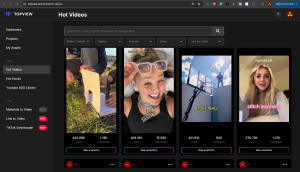
Tiktok’s Template Library allows you to create video content using pre-made templates. These videos can be customized and edited to match the style, theme, and message of your content. The templates in the Tiktok ADS Library Template Library include everything from fun animations to romantic scenes. You can even add captions, hashtags, and location tags to your videos.
With the rise of short videos on social media, it’s important to keep up with the latest trends in video editing and production. These templates allow you to keep up with these trends and stay relevant with your audience. If you’re new to creating videos, a template is a great way to get started. Using a template can help you save time and ensure that your videos are consistent with the rest of your content. It’s also a good way to avoid common mistakes that can lead to inconsistencies or confusion among your audience.
A template is also a great way to test your creative ideas and experiment with different techniques. By using a template, you can see how the design, music, and script of your video impacts its engagement levels. Then, you can use this information to improve your future videos. You can also use the Tiktok ADS Library to test out different ads that will appeal to your target audience. One of the most impressive aspects of AI video editing software is how it helps editors handle multi-camera shoots. Whether you have multiple cameras or an uneven shot, AI video editor software can automatically sync up clips and adjust their order to make them more cohesive.
It can also separate your subject from the background, allowing you to use a more interesting backdrop or even replace the background entirely without spending money on a green screen and other costly equipment. Other features in AI video editing tools include motion tracking and the ability to blur faces or other objects using machine learning. In a world where many marketing videos need to be customized for each platform’s audience, AI tools can help you maintain a consistent brand look and feel. These tools can detect your content’s style, recognize emotions, and suggest edits to speed up your workflow.
Video-making software with AI also lets you reframe your footage to suit different social media platforms like Instagram or YouTube. For example, you can change the aspect ratio of your videos to fit a vertical 9:16 format for Instagram Stories or a horizontal layout for YouTube. Other features include object removal and the ability to create text captions using voice-to-text. With AI, video editing can be as simple as hitting a button and letting the software do the work for you.
As AI continues to advance, it’s becoming easier than ever for creators to translate and localize their videos. With AI lip sync, voice cloning, translation, and dubbing apps and tools available, video production is now more accessible than ever for businesses that want to reach new audiences.
These applications are a game-changer for many businesses and can help reduce the cost of hiring a professional to do this work manually. They also offer a faster, more accurate way to create multilingual content. Choosing the right lip sync tool will depend on the type of content being created and the business’s goals. For example, some apps may not be able to sync well with certain sounds or rapid speech. They also tend to have a lower accuracy level with videos that are poorly lit or shot with blurry footage.
For more advanced needs, some apps can also be used to create voice tracks that sound more natural than traditional lip synchronization. Rask AI, for example, can provide translated or dubbed audio with voices that are completely indistinguishable from the original audio. Additionally, it can even clone the original voice to keep the same tone and cadence throughout all languages for an authentic experience.
Although the benefits of this technology are vast, there is a concern that AI can be used to generate misleading or fake audio content that can be difficult for humans to distinguish from reality. This is why it’s important for creators to understand how their content will be used and ensure they are adhering to ethical practices when using this technology.